

WHITE PAPER | Kx Advisors, part of BGBx Consulting
Beyond C5: Complement Inhibition Is Moving Toward Lower-Burden, Disease-Specific Approaches
A pipeline analysis of rare-disease complement therapeutics, from preclinical development through approval
Author:
Chloe Lok, Vice President, Kx Advisors, part of BGBx Consulting
With contributions from the following Kx Advisors associates:
Zoe James, Manager
Robyn Butler, Engagement Lead
Calista Agyeman, Senior Associate Consultant
Faye Song, Senior Associate Consultant
Zoya Solaja, Senior Associate Consultant
Executive Summary
KEY TAKEAWAY
Complement innovation is shifting away from a C5-dominated era toward earlier, pathway-specific, and lower-burden therapies, raising the bar for differentiation as competition intensifies. C5 inhibition remains foundational, but competitive advantage will increasingly depend on mechanism-disease fit, treatment burden, and evidence for sequencing and switching.
Four findings from the pipeline analysis support this, each explored in Sections 2 to 5.
FINDING 1 | SECTION 2
Development is shifting toward earlier, pathway-specific targets. Alternative-pathway inhibition now holds the largest share of recent development, while the downstream share has declined.
FINDING 2 | SECTION 3
Target diversification is raising the bar for patient selection and sequencing. Factor B and C5 lead pipeline activity, with Factor B showing substantial late-stage development.
FINDING 3 | SECTION 4
Oral and non-mAb approaches are changing expectations for treatment burden. Oral now accounts for the most programmes of any route category, and nucleic acid therapeutics have grown from 3 programmes to 34.
FINDING 4 | SECTION 5
Evidence increasingly supports mechanism-matched inhibition. Disease-specific data in PNH, C3G, IgAN, and gMG point toward matching mechanism to disease biology and patient subgroup.
THE NUMBERS BEHIND THE FINDINGS
FINDING 1
47%
of classified assets represented in programmes entering clinical development in 2022 to 2026 target the alternative pathway, up from 0% before 2017
FINDING 2
61
asset-indication programmes each for Factor B and C5, the two largest target groups in the pipeline
FINDING 3
46
oral asset-indication programmes, ahead of subcutaneous (41) and intravenous (38)
FINDING 4
44%
IgAN example: reduction in proteinuria at 9 months with iptacopan in IgAN, versus 9% with placebo
SECTION 1
Why the field is moving beyond C5
C5 inhibitors established the clinical and regulatory precedent for terminal complement blockade. However, residual disease activity, ongoing haemolysis, treatment burden, and safety considerations continue to drive innovation beyond C5.
This paper maps the current and emerging rare-disease complement inhibitor landscape, from preclinical development through approval. It identifies four shifts shaping the next phase of complement-directed therapy: earlier pathway intervention, target diversification, modality and route innovation, and more indication-specific treatment strategies.
How we categorised complement inhibitors
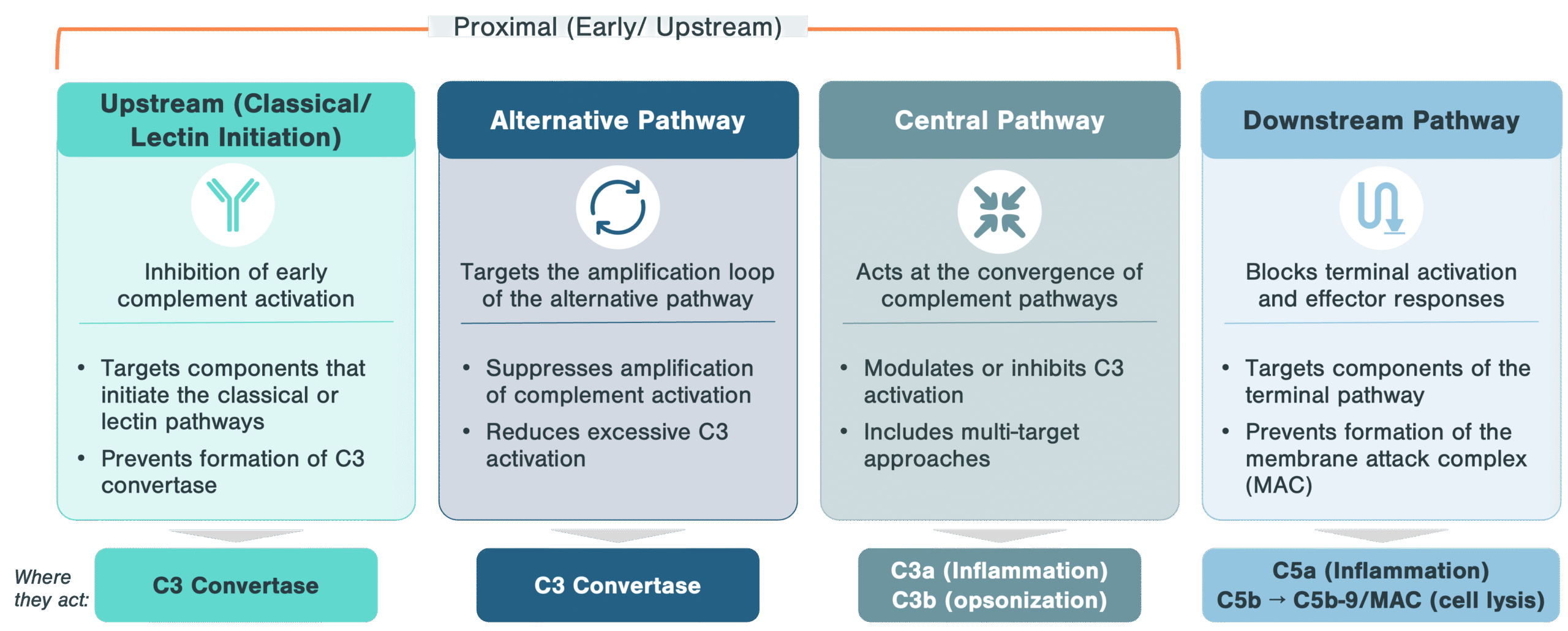
To track where development is heading, each inhibitor was categorised by its site of action in the complement cascade.1-4
- Upstream (classical and lectin initiation). Targets components that initiate the classical or lectin pathways and prevents formation of C3 convertase.
- Alternative pathway. Targets the amplification loop of the alternative pathway, suppressing excessive C3 activation. Complement inhibition has transformed the treatment of several rare, complement-mediated diseases.
- Central (C3). Acts at the convergence of the complement pathways by modulating or inhibiting C3 activation, and includes multi-target approaches.
- Downstream (terminal pathway). Blocks terminal activation and effector responses by targeting components of the terminal pathway and preventing formation of the membrane attack complex (MAC). C5 is the best-established target in this category.
In this paper, proximal inhibition means inhibition at C3 or upstream of C5, including C3, Factor B, Factor D, and early classical and lectin pathway targets.5
Figure 1: Complement pathway categorisation
“
C5 inhibition remains foundational, but the next wave of complement therapies is moving the field toward more pathway-specific, lower-burden, and patient-tailored approaches.”
SECTION 2 | FINDING 1
Development is shifting from terminal C5 inhibition toward earlier, pathway-specific targets
C5 remains an important and established foundation for complement inhibition. But recent pipeline activity is increasingly concentrated in alternative-pathway inhibition, with central C3 targeting also gaining traction. This suggests growing interest in intervening earlier in the cascade, to modulate complement activation before terminal effector damage occurs. In category terms, the shift is away from terminal (downstream) inhibition toward alternative-pathway and other proximal mechanisms, including central C3 targeting.
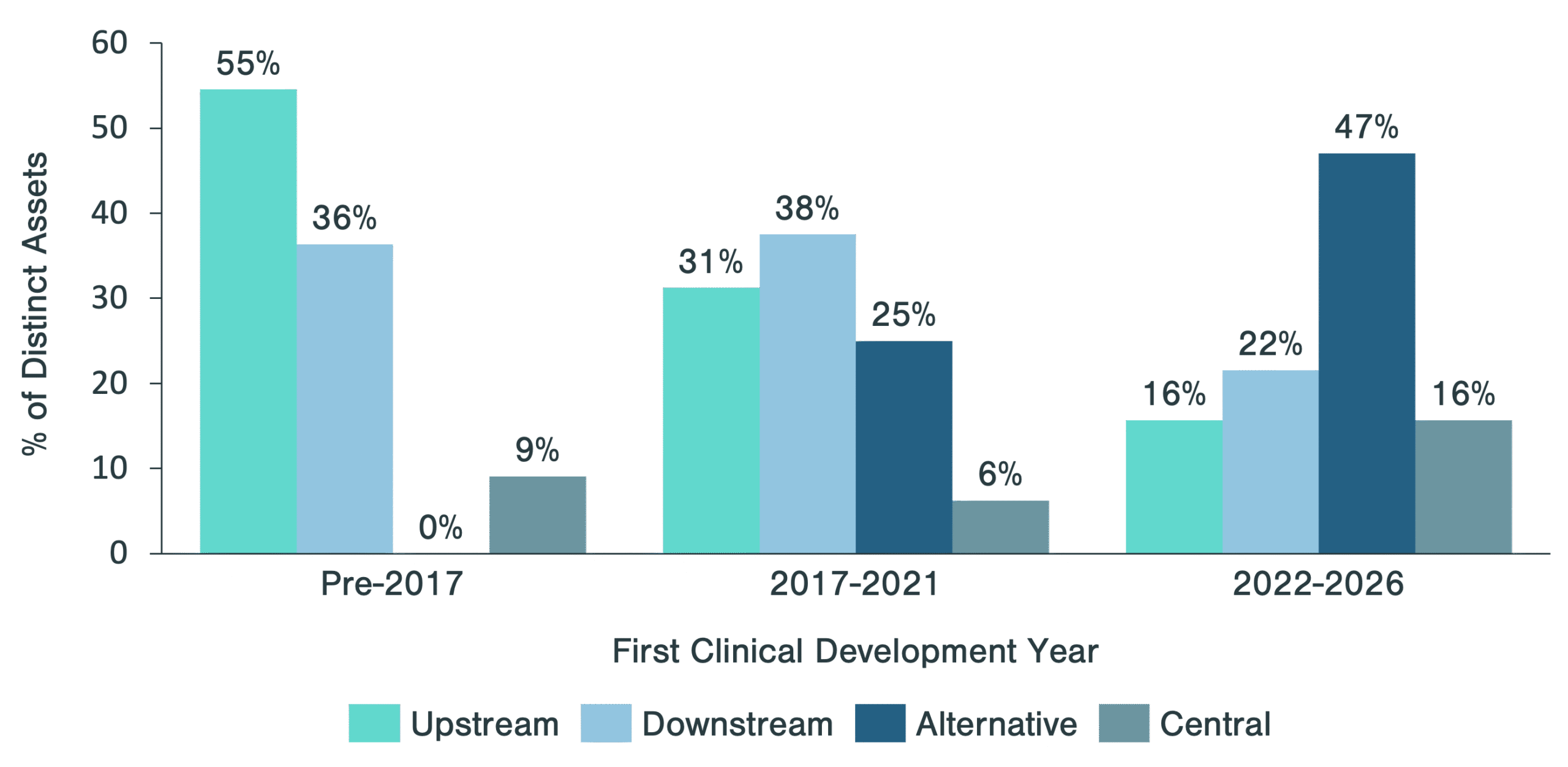
Figure 2: Complement inhibitor development by pathway category over time
What the data show
- Alternative pathway: 0% of assets before 2017, 25% in 2017 to 2021, and 47% in 2022 to 2026. It is now the largest single share.
- Downstream (terminal pathway): 36%, then 38%, then 22%. The share has declined as development broadens across the cascade. This category includes C5 and other terminal components.
- Upstream: 55%, then 31%, then 16%. Once the largest category, it has become less dominant.
- Central (C3): 9%, then 6%, then 16%. A smaller but recently growing area of activity.
Why this may be happening
SO WHAT
Earlier intervention could allow greater control of complement activation before terminal effector damage occurs.
SECTION 3 | FINDING 2
Molecular target diversification is raising the bar for patient selection and sequencing
The complement landscape is no longer centred only on C5. C5 remains the most established target, supported by a proven clinical and regulatory precedent and multiple approved therapies. But recent innovation is increasingly distributed across C1, C3, Factor B, Factor D, MASP, and multi-complement targets.
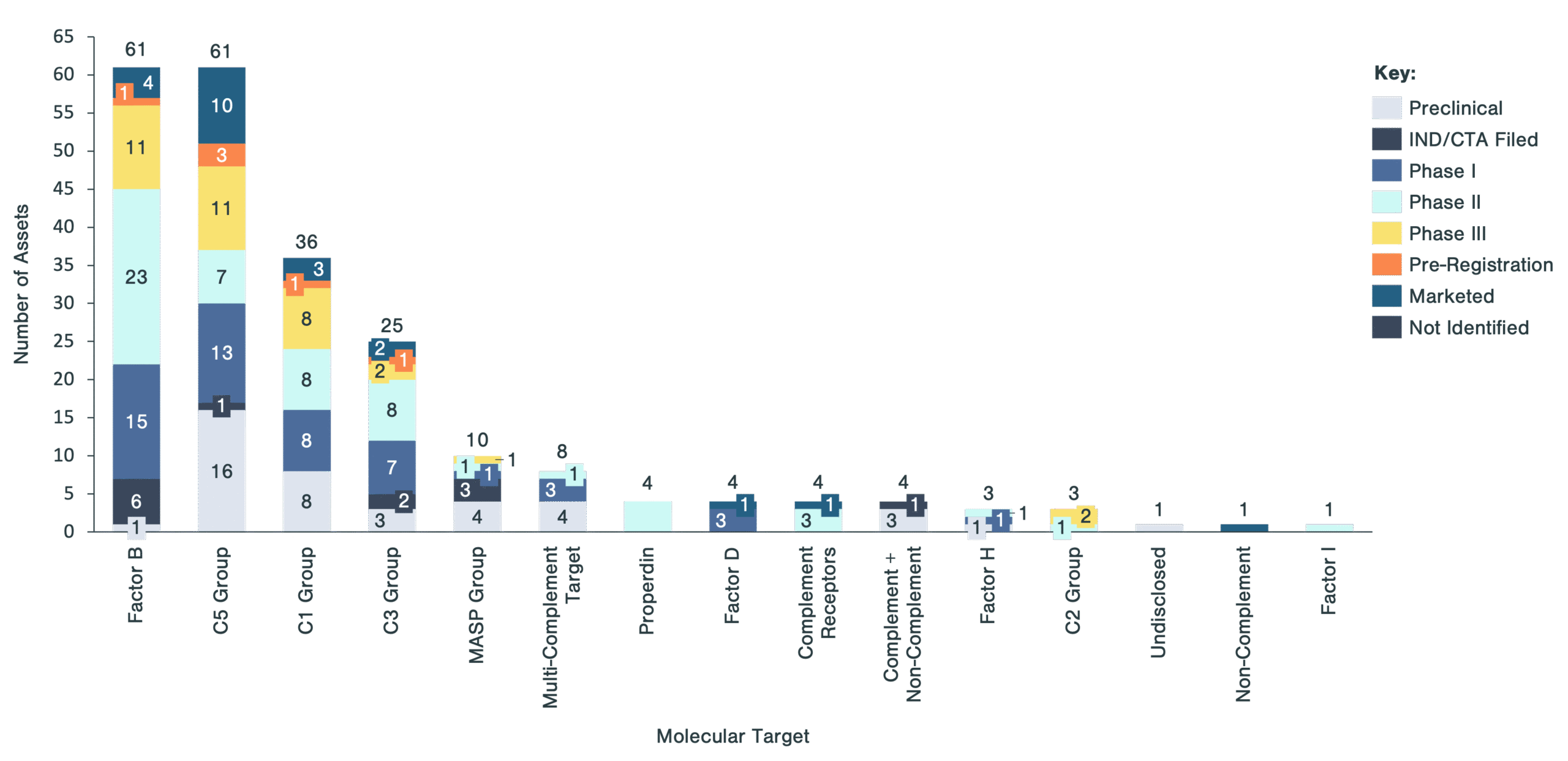
Figure 3: Number of programmes by molecular target in each development phase
What the data show
- Factor B and C5 are the two largest target groups, with 61 asset-indication programmes each, followed by C1 (36) and C3 (25). Factor B shows substantial late-stage development, alongside its leading overall asset count.
The 226 asset-indication programmes in the analysis, covering 95 unique assets, span 15 target categories, from well-established targets to categories with a single programme.
Why this matters
SO WHAT
More molecular targets will increase the need to define which patients benefit from each mechanism and how therapies should be sequenced or combined.
SECTION 4 | FINDING 3
Oral and non-mAb approaches are changing expectations for treatment burden and differentiation
Complement inhibitor modalities are diversifying beyond monoclonal antibodies, with increasing activity in small molecules, nucleic acid therapeutics, and protein-based approaches. At the same time, oral complement inhibitors are becoming a more established part of the development landscape. These approaches may reduce administration burden and create greater flexibility for long-term disease management, although convenience alone may not remove access barriers in high-cost rare-disease settings.
Modality: diversifying beyond monoclonal antibodies
Figure 4: Complement inhibitor programmes by therapeutic modality across development periods
Programmes can have more than one modality, so the counts can add up to more than the number of programmes.
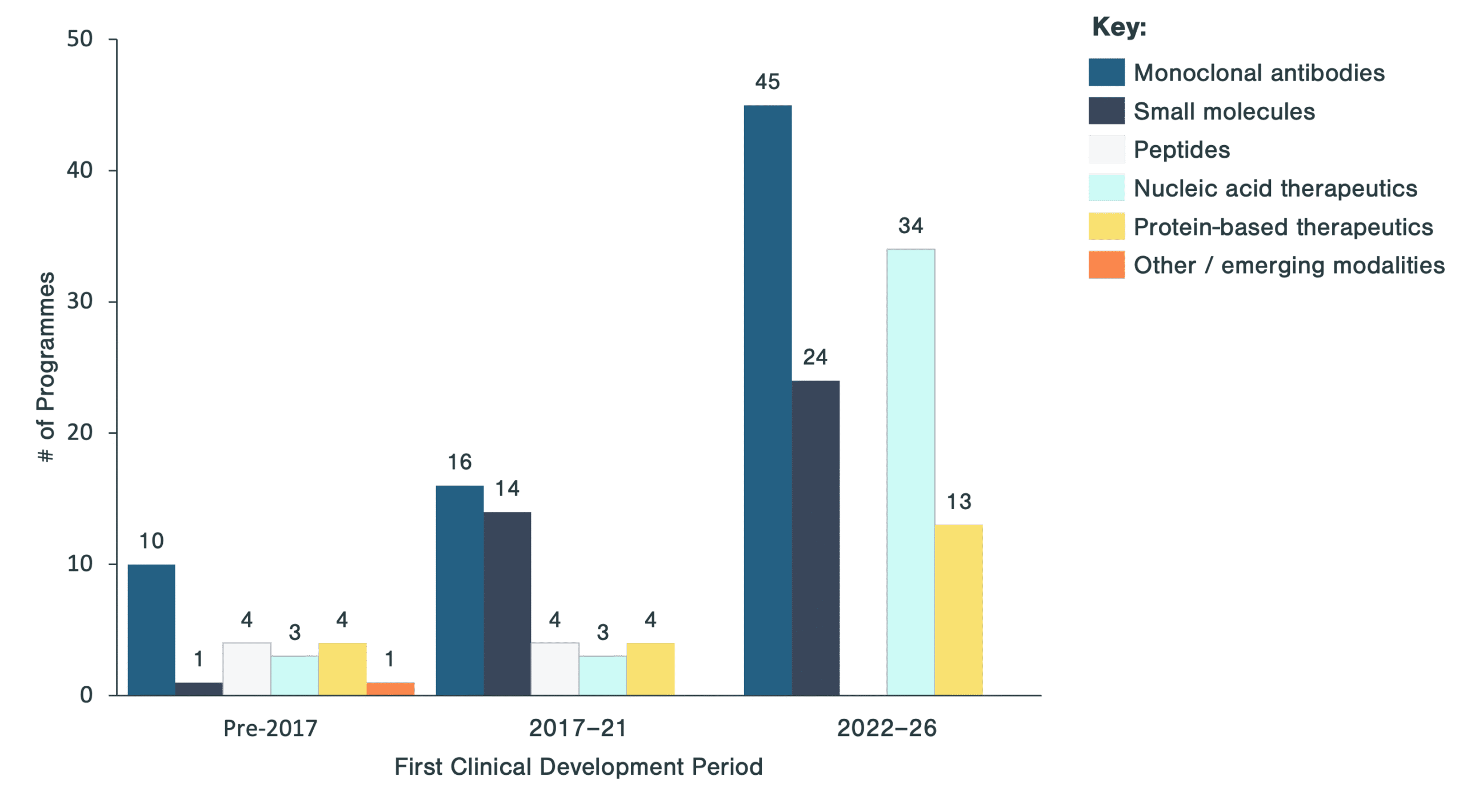
- Nucleic acid therapeutics: 3 programmes before 2017, 3 in 2017 to 2021, and 34 in 2022 to 2026.
- Small molecules: 1, then 14, then 24 programmes.
- Monoclonal antibodies remain the largest single modality in the latest period (45 programmes, versus 10 and 16 in the two earlier periods).
- Protein-based therapeutics grew from 4 to 13 programmes, while peptides were 4, 4, and 0 programmes across the three periods.
The rise of small molecules and other non-mAb approaches may reduce treatment burden by enabling less administration-intensive options than repeatedly dosed biologics.6,7 Different modality profiles may also allow treatment to be better matched to disease pathophysiology and clinical need, balancing sustained suppression with rapid reversibility where treatment discontinuation may be required.8 These approaches could address unmet needs beyond efficacy, particularly treatment burden, dosing flexibility, and safety management in patients requiring lifelong complement inhibition.6,8
Route: oral options are growing
Figure 5: Number of programmes by route of administration and first clinical development year
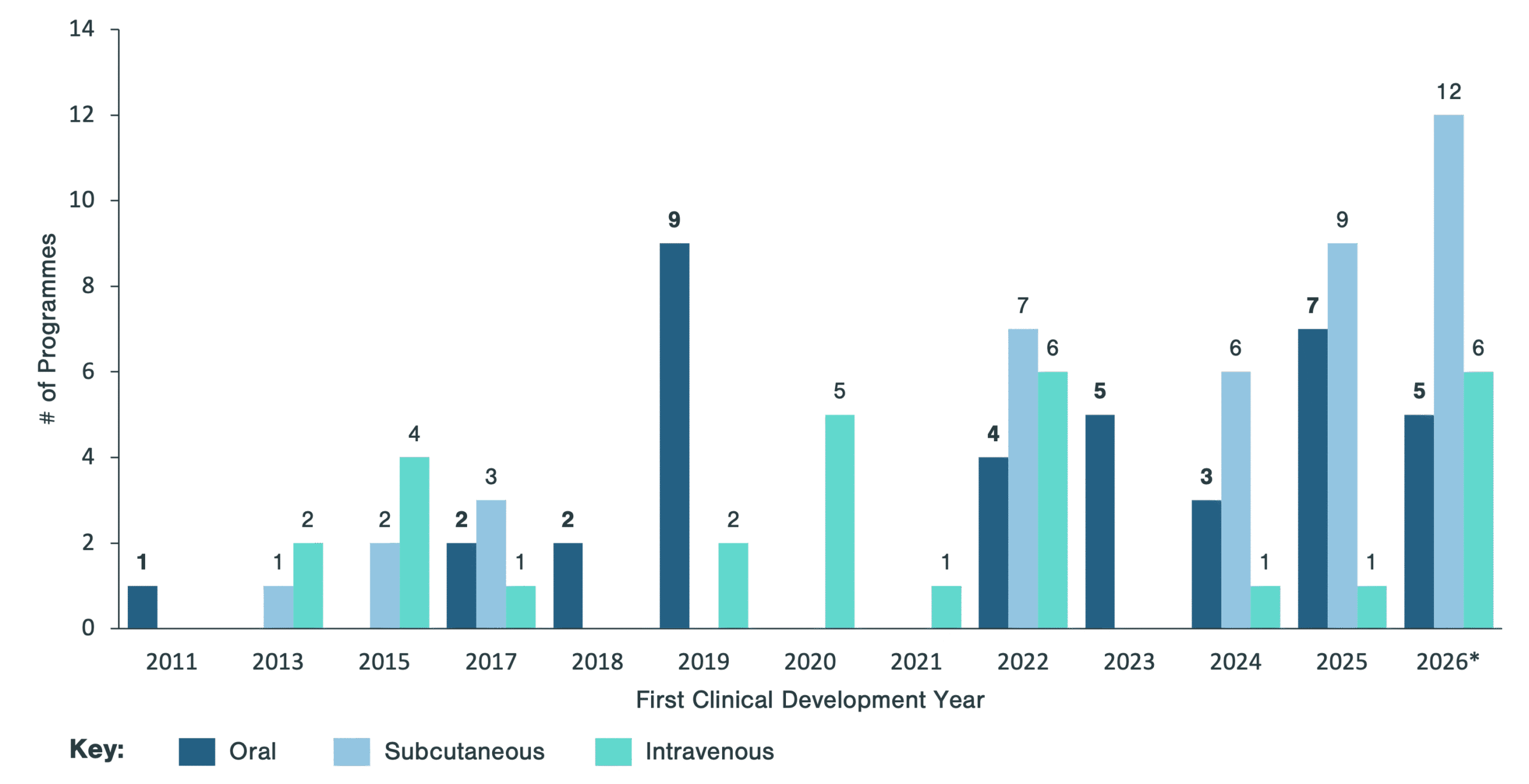
*2026 is a partial year. Not shown: 7 intravenous programmes that first entered clinical development before 2011 (2001, 2005, 2009) and programmes with no known first year (oral 8, subcutaneous 1, intravenous 2). Years with no assets in any of the three routes (2012, 2014, 2016) are left out.
- Oral is the largest route category by programme count, with 46 asset-indication programmes, ahead of subcutaneous (41) and intravenous (38). Counted as unique assets, the three routes are close: subcutaneous 19, oral 18, intravenous 17. Oral assets first entering clinical development by year: 9 in 2019, then 4 in 2022, 5 in 2023, 3 in 2024, 7 in 2025, and 5 so far in 2026 (a partial year).
Oral complement inhibitors are becoming a more established part of the development landscape, with multiple programmes entering clinical development in recent years. This is likely due to the lower administration burden of oral inhibitors, particularly for patients who otherwise need repeated intravenous treatment or venous access.9,10 As treatment shifts away from supervised administration, patient education and adherence support become more important components of care.9,11
WHY IT MATTERS
Convenience may not translate into easier access. High treatment costs still drive prior authorisation and additional requirements.9,12 For infused and injected competitors, the bar is rising: they may need to demonstrate clearer incremental value beyond established efficacy.
SECTION 5 | FINDING 4
Evidence increasingly supports mechanism-matched complement inhibition
PNH, IgAN, gMG, and C3G were selected for deeper analysis because they carry the highest level of complement inhibitor pipeline activity. Development is concentrated where complement has a well-established pathogenic role and clinical validation is strongest. PNH spans terminal and alternative pathways, IgAN shows alternative-pathway activity, and gMG remains predominantly focused on downstream C5. PNH and IgAN are also attracting a broader mix of therapeutic modalities over time than gMG and C3G.
Efficacy figures in this section come from separate studies with different populations, designs, endpoints, and timepoints. They are not head-to-head comparisons.
PNH | Paroxysmal nocturnal haemoglobinuria
WHAT THE EVIDENCE SHOWS
- Switching from C5 inhibition. In patients with residual anaemia despite C5 inhibition, pegcetacoplan improved haemoglobin by +2.37 g/dL versus −1.47 g/dL with eculizumab, and increased transfusion avoidance to 85.4% versus 15.4%.13,14
- In patients inadequately controlled on established C5 therapy, switching to oral iptacopan improved haemoglobin by +3.6 g/dL versus −0.1 g/dL with continued anti-C5 therapy, with transfusion avoidance of 95.2% versus 45.7%.15,16 In patients previously treated with infused C5 inhibitors, 82.3% achieved a haemoglobin improvement of at least 2 g/dL.15,16
- Adding to C5 inhibition. In patients with residual extravascular haemolysis, adding danicopan to ravulizumab or eculizumab improved haemoglobin by +2.9 versus +0.5 g/dL and transfusion avoidance to 83.3% versus 38.1%, supporting an add-on approach.17,18
- Within C5 inhibition. Ravulizumab and crovalimab achieved haemolysis control broadly comparable with eculizumab, suggesting newer C5 agents may differentiate more through dosing, administration, and treatment burden than through greater efficacy. 19,20
STRATEGIC IMPLICATION
Opportunity for escalation, switching, or add-on strategies in defined residual-disease segments.
C3G / DDD | C3 glomerulopathy and dense deposit disease
- C3 inhibition. Pegcetacoplan reduced the urine protein-to-creatinine ratio (UPCR), at week 26, by 67.2% versus a 2.9% increase with placebo, and 60% versus 5% of patients achieved a reduction in proteinuria of at least 50%.21
- Factor B inhibition. In the primary analysis, iptacopan reduced proteinuria by 30.2% versus an increase of 7.6% with placebo, a 35% placebo-adjusted reduction in UPCR, clinically meaningful efficacy with an oral small-molecule approach.15
- Together, these results support proximal targeting in a disease haracterized by C3 deposition and alternative-pathway dysregulation.15,21
- Pipeline composition. Despite positive clinical evidence for C3 and Factor B inhibition, the analysed C3G and DDD pipeline remains relatively downstream and C5-focused. The development landscape is also smaller and more heterogeneous, which may constrain modality innovation.
STRATEGIC IMPLICATION
Strong rationale for disease-biology-led target selection.
IgAN | IgA nephropathy
- Factor B inhibition. At 9 months, iptacopan reduced proteinuria by 44% versus 9% with placebo.15,22 Over 24 months, it slowed the decline in eGFR, with an annualised slope estimated at −3.1 versus −6.12 mL/min/1.73 m² per year.15,22
- Oral iptacopan delivered a 38% placebo-adjusted reduction in proteinuria at 9 months, alongside significant slowing of eGFR decline over 24 months, showing that pathway-aligned inhibition can translate into renal benefit.15,22
- Pipeline composition. IgAN shows alternative-pathway activity and is attracting a broad mix of modalities, which may support more individualised treatment selection.23,24,25
STRATEGIC IMPLICATION
Alternative-pathway targeting may support earlier intervention and renal preservation.
gMG | Generalised myasthenia gravis
- C5 approaches. Ravulizumab, cemdisiran, and gefurulimab have randomized evidence of improvement in MG-ADL and QMG scores.26,27,28 Eculizumab is more nuanced: the REGAIN trial did not formally meet its prespecified primary endpoint, although sensitivity and secondary analyses supported efficacy.29
- Upstream mechanisms. The upstream C1s inhibitor claseprubart showed placebo-adjusted improvements in MG-ADL and QMG in a Phase 2 study.30 A Phase 3 trial (EMERGE) has been initiated.31
- Pipeline composition. gMG development remains predominantly focused on downstream C5. Lower modality diversity may reflect established treatment precedent.
STRATEGIC IMPLICATION
Differentiation may depend on efficacy, route, dosing, onset, safety, and patient fit.
“Route, dosing, safety, treatment burden, and patient fit are likely to remain important dimensions of differentiation.”
ACROSS DISEASES
Across gMG and PNH, available evidence has not established a consistent efficacy advantage for newer mechanisms over established approaches. As the landscape evolves, route, dosing, safety, treatment burden, and patient fit are therefore likely to remain important dimensions of differentiation.
SECTION 6
What this means for you
As complement-directed therapies expand across pathway targets, modalities, and routes of administration, the key strategic question is no longer whether complement inhibition is clinically meaningful. Instead, the field must determine which mechanism is best matched to which disease biology, patient subgroup, and treatment context.

Patients
Next-generation complement therapies may offer more individualised options, particularly where terminal C5 inhibition does not fully control disease activity or where long-term parenteral administration creates substantial treatment burden. In PNH, proximal inhibition has demonstrated benefit in patients with residual anaemia or extravascular haemolysis despite C5 inhibition. Oral approaches in PNH, C3G, and IgAN suggest the potential for more convenient long-term disease management.

Developers
The importance of biomarker strategy, indication selection, burden-of-treatment endpoints, and evidence supporting sequencing or switching increases. Modality diversity is also raising the efficacy bar for new treatments, increasing the importance of demonstrating meaningful incremental benefit to support clinical uptake and reimbursement.32

Clinicians
A more complex treatment landscape will require clearer guidance on patient selection and monitoring. As care moves away from supervised administration, patient education and adherence support become more important.9,11

Payers and Healthcare Systems
Differentiation will likely need to extend beyond efficacy to include route of administration, safety, adherence, treatment burden, and real-world value. Oral convenience may not ease access, as high treatment costs still drive prior authorisation and additional requirements.9,12
Conclusion
C5 inhibition remains foundational, but the next wave of complement therapies is moving the field towards more pathway-specific, lower-burden, and patient-tailored approaches. These therapies may not simply expand the number of available options, but reshape how complement-mediated rare diseases are classified, treated, and managed over time.
Contact Chloe Lok, [email protected], or the Kx Advisors team to discuss what these shifts mean for your programme or portfolio.
SECTION 7
Methodology and limitations
Scope and data
- A structured pipeline analysis of rare-disease complement-directed therapies, from preclinical development through regulatory approval.
The analysis focused on active complement inhibitor assets identified through GlobalData and Evaluate Pharma, 24, 25 supplemented and cross-checked against primary sources where required, including ClinicalTrials.gov, FDA regulatory records and prescribing information, other regulatory databases, and company disclosures. Pipeline data were current as of August 2026. Assets were categorised by molecular target, pathway category, modality, route of administration, stage of development, first clinical development year, and disease focus.
Analysis conventions
- Pathway share is the number of programmes in each pathway category divided by the total classified complement assets first entering clinical development in that period. Non-complement and unresolved assets were excluded from pathway-share analyses.
- Periods are pre-2017, 2017 to 2021, and 2022 to 2026. 2026 data reflect assets identified to date and represent a partial year.
Programmes spanning multiple modalities or routes were counted in each relevant category, so modality counts can add up to more than the number of programmes. - PNH, IgAN, gMG, and C3G were selected for deeper analysis due to having the highest level of complement inhibitor pipeline activity. The indication-level modality analysis includes rare-disease indications with at least five unique complement inhibitor assets.
- Route categories shown are single-route categories. Combination-route assets, such as intravenous and subcutaneous together, are reported separately in the data.
- Counts in the molecular target, modality, and route analyses are asset-indication programmes. An asset in development for more than one indication is counted once per indication. The 226 programmes in these analyses cover 95 unique assets.
- One asset-indication programme with a 2027 first clinical development year was excluded from all analyses.
Limitations
- Pipeline data reflect publicly identified assets and may not capture undisclosed or very early-stage programmes.
- Some assets span multiple modalities, routes, targets, or indications and may be counted in more than one category depending on the analysis.
Clinical efficacy figures come from published trials and prescribing information with different populations, designs, endpoints, and timepoints, and are not head-to-head comparisons.
Abbreviations
C3G, C3 glomerulopathy. DDD, dense deposit disease. eGFR, estimated glomerular filtration rate. gMG, generalised myasthenia gravis. IgAN, IgA nephropathy. MAC, membrane attack complex. MG-ADL, Myasthenia Gravis Activities of Daily Living. PNH, paroxysmal nocturnal haemoglobinuria. QMG, Quantitative Myasthenia Gravis score. UPCR, urine protein-to-creatinine ratio.
SECTION 8
References
- Leventoğlu E, Bakkaloğlu SA. A new perspective on the pathophysiology of kidney diseases: the intracellular complement system, “complosome”. Frontiers in Nephrology. 2026;6:1741099. doi:10.3389/fneph.2026.1741099
- Hycult Biotech. The Complement System. Hycult Biotech website. n.d. https://www.hycultbiotech.com/complement-system/
- Noris M, Remuzzi G. Overview of complement activation and regulation. Seminars in Nephrology. 2013;33(6):479–492. doi:10.1016/j.semnephrol.2013.08.001
- Mastellos DC, Reis ES, Ricklin D, Smith RJ, Lambris JD. Complement C3-targeted therapy: replacing long-held assertions with evidence-based discovery. Trends in Immunology. 2017;38(6):383–394. doi:10.1016/j.it.2017.03.003
- Kavanagh D, Barratt J, Schubart A, Webb NJA, Meier M, Fakhouri F. Factor B as a therapeutic target for the treatment of complement-mediated diseases. Frontiers in Immunology. 2025;16:1537974. doi:10.3389/fimmu.2025.1537974
- Dianthus Therapeutics, Inc. Corporate presentation. 1 August 2026.
- Climb Bio, Inc. Investor presentation. 6 August 2026.
- Jefferies Research. Jefferies 2018 Complement Therapeutics Summit: Progress & Potential. 11 April 2018.
- Versino F, Fattizzo B. Complement inhibition in paroxysmal nocturnal hemoglobinuria: from biology to therapy. International Journal of Laboratory Hematology. 2024;46(Suppl 1):43–54. doi:10.1111/ijlh.14281
- Nuvectis Pharma, Inc. Special call. 22 June 2026.
- H.C. Wainwright. U.S. Regulatory Execution is the Focus Following Pipeline Expansion: 2Q26 Results. 4 August 2026.
- Expert call. Hematologist Oncologist Evaluates Nuvectis Pharma’s NXP100 and NXP200 for PNH and BRAF-Mutated Cancers. 16 July 2026.
- Hillmen P, Szer J, Weitz I, et al. Pegcetacoplan versus eculizumab in paroxysmal nocturnal hemoglobinuria. New England Journal of Medicine. 2021;384(11):1028–1037. doi:10.1056/NEJMoa2029073
- U.S. Food and Drug Administration. EMPAVELI (pegcetacoplan) prescribing information. Revised June 2025.
- U.S. Food and Drug Administration. FABHALTA (iptacopan) prescribing information. Revised July 2026.
- ClinicalTrials.gov. Study of Efficacy and Safety of Twice Daily Oral LNP023 in Adult PNH Patients With Residual Anemia Despite Anti-C5 Antibody Treatment (APPLY-PNH). ClinicalTrials.gov identifier NCT04558918. September 2024.
- U.S. Food and Drug Administration. VOYDEYA (danicopan) prescribing information. March 2024.
- Lee JW, Griffin M, Kim JS, et al. Addition of danicopan to ravulizumab or eculizumab in patients with paroxysmal nocturnal haemoglobinuria and clinically significant extravascular haemolysis (ALPHA): a double-blind, randomised, phase 3 trial. The Lancet Haematology. 2023;10(12):e955–e965. doi:10.1016/S2352-3026(23)00315-0
- Lee JW, Sicre de Fontbrune F, Lee LWL, et al. Ravulizumab (ALXN1210) versus eculizumab in adult patients with PNH naive to complement inhibitors: the 301 study. Blood. 2019;133(6):530–539. doi:10.1182/blood-2018-09-876136
- Röth A, He G, Tong H, et al. Phase 3 randomized COMMODORE 2 trial: crovalimab versus eculizumab in patients with paroxysmal nocturnal hemoglobinuria naive to complement inhibition. American Journal of Hematology. 2024;99(9):1768–1777. doi:10.1002/ajh.27412
- Fakhouri F, Bomback AS, Ariceta G, et al. Trial of pegcetacoplan in C3 glomerulopathy and immune-complex MPGN. New England Journal of Medicine. 2025;393(22):2210–2220. doi:10.1056/NEJMoa2501510
- Barratt J, Eren N, Kashihara N, et al. Iptacopan in IgA nephropathy: final 24-month data. New England Journal of Medicine. 2026;395(5):465–477. doi:10.1056/NEJMoa2600743
- Mathur M, Sahay M, Pereira BJG, Rizk DV. State-of-art therapeutics in IgA nephropathy. Indian Journal of Nephrology. 2024;34(5):417–430. doi:10.25259/ijn_319_23
- GlobalData. Drug pipeline database. Last accessed August 2026.
- Evaluate Pharma. Drug pipeline database. Last accessed August 2026.
- Howard JF Jr, Vu T, Mantegazza R, et al. Efficacy of ravulizumab in patients with generalized myasthenia gravis by time from diagnosis: a post hoc subgroup analysis of the CHAMPION MG study. Muscle & Nerve. 2024;69(5):556–565. doi:10.1002/mus.28044
- Vu T, Habib AA, Jacob S, et al. Efficacy and safety of cemdisiran siRNA in myasthenia gravis (NIMBLE): a double-blind, randomised, placebo-controlled, phase 3 trial. The Lancet. 2026;407(10540):1712–1725. doi:10.1016/S0140-6736(26)00690-2[TR11.1][CL11.2]
- Gwathmey KG, Saccà F, Howard JF, et al. Efficacy and safety of gefurulimab in generalized myasthenia gravis: the PREVAIL phase 3 randomized clinical trial. JAMA Neurology. 2026;83(9):841–850. doi:10.1001/jamaneurol.2026.2333
- Howard JF Jr, Utsugisawa K, Benatar M, et al. Safety and efficacy of eculizumab in anti-acetylcholine receptor antibody-positive refractory generalised myasthenia gravis (REGAIN): a phase 3, randomised, double-blind, placebo-controlled, multicentre study. The Lancet Neurology. 2017;16(12):976–986. doi:10.1016/S1474-4422(17)30369-1[TR12.1][CL12.2]
- Dianthus Therapeutics, Inc. Dianthus Therapeutics Announces Positive Data for Claseprubart (DNTH103) from the Phase 2 MaGic Trial in Generalized Myasthenia Gravis, Supporting Its Potential Best-In-Class Profile. Company news release. 8 September 2025.
- Dianthus Therapeutics, Inc. Dianthus Therapeutics Announces Initiation of Phase 3 EMERGE Trial of Claseprubart in Generalized Myasthenia Gravis. Company news release. 29 June 2026.
- Ricklin D. Complement-targeted therapeutics: are we there yet, or just getting started? European Journal of Immunology. 2024;54(12):2350816. doi:10.1002/eji.202350816
About the author

Chloe Lok
Vice President,
Kx Advisors, part of BGBx Consulting
With more than a decade of experience in the healthcare industry, Chloe leads engagements across pharmaceutical, biotechnology, and digital health organizations. Based in London, Chloe partners with global clients to shape asset and portfolio strategy, guide launch planning, and navigate complex commercial and clinical landscapes. She has deep expertise in rare diseases, immunology, and hematology, and additional experience spanning respiratory and psychiatry.
Contact: [email protected]
About Kx Advisors
For more than 40 years, Kx Advisors, part of BGBx Consulting, has provided strategy consulting services to help healthcare executives achieve critical business growth goals. With a highly collaborative approach they have developed pragmatic solutions for leading pharmaceutical, biotechnology, medical device, and diagnostics clients, with data-driven insights to give those clients the tools to compete and win across the healthcare industry.
www.bgbx.com/consulting
