

ARTICLE | BGBx
The Execution Gap
Why Pharma Brand Teams Are Struggling To Keep Pace And How To Move Forward
Authors:
Drew Bustos, Chief Growth Officer, BGBx
Broderick Crosland, Strategic Marketing & Omnichannel Advisor
Executive Summary
Pharma brand teams know exactly what they need to accomplish. Increasing market share, deepening HCP engagement, and strengthening brand differentiation are near-universal priorities across therapeutic areas. The goals are not the problem.
The challenge is execution. Today’s commercial environment demands a level of coordination, speed, and customer understanding that most organizations were never designed to support. Siloed teams. Fragmented data. AI tools adopted faster than the organizational infrastructure to support them. Omnichannel strategies that exist in frameworks but not in practice. The distance between strategic clarity and commercial impact has never been wider. And the stakes continue to rise as pharmaceutical companies face unprecedented pressure to replace revenue, accelerate launches, and deliver measurable commercial impact in an increasingly complex market.
This paper argues that the execution gap reflects a deeper market shift. As the commercial environment has become increasingly multidimensional, many organizations continue to make decisions, build capabilities, and execute in functional silos. The result is an execution gap that is widening just as the pressure to close it has never been greater.
Closing the execution gap requires a deeper understanding of customer intent for better commercial decision-making, and integrating three distinct but interdependent dimensions of understanding: behavioral science, which explains why HCPs and patients make the decisions they do; medical science, which ensures every strategy is clinically credible; and data science, which reveals patterns, predicts behavior, and makes the invisible visible. Together, they provide a more complete foundation for commercial decision-making. Separately, they leave brands guessing.
The recent research cited in this paper suggests this shift is already underway, and that organizations able to integrate these dimensions will be best positioned to close the execution gap.
1. The Pressure Is Real And Getting Harder To Ignore
Pharma brand managers have always operated under pressure. But the nature of that pressure has shifted in ways that matter.
The urgency extends well beyond the marketing organization. Over the next five years, the pharmaceutical industry faces one of the largest waves of loss-of-exclusivity (LOE) in its history, requiring companies to replace hundreds of billions of dollars in revenue as blockbuster brands lose patent protection. At the same time, launch timelines continue to compress while payer expectations, pricing pressures, and evidence requirements continue to rise.
Brand teams are being asked to deliver more impact, in less time, with greater accountability than ever before. Success is no longer measured by field readiness or campaign delivery alone. Commercial teams are increasingly expected to identify new sources of growth, uncover actionable customer insights, and demonstrate measurable commercial impact.
The boardroom conversation has changed. According to the fifth annual Boathouse CEO Study, published in early 2026 and drawing on responses from 150 CEOs of major U.S. companies, the share of CEOs who view marketing as a profit center dropped from 65% to just 40% in a single year.¹ Marketing is not becoming less important. It is being asked to demonstrate measurable commercial impact with greater precision than ever before. That view shapes budgets, timelines, and the tolerance for investment without demonstrable return.
For pharma brand managers, this translates directly into day-to-day reality. Investment decisions are more scrutinized. Timelines are compressed. The expectation is not just that campaigns perform – it’s that they perform in ways that can be clearly measured, attributed, and defended. In this environment, marketing fundamentals matter more, not less. Understanding customers, uncovering new opportunities for growth, and translating insight into measurable action have become strategic capabilities.
At the same time, the commercial landscape has grown more complex. More channels, more stakeholders, more regulatory constraints, and more data than most teams know how to use effectively. The playbooks that worked five years ago are straining under the weight of what the market now requires.

From Customer Behavior to Customer Intent
One of the biggest opportunities for commercial organizations is to move beyond reacting to customer behaviors and begin understanding customer intent. Right now, brands heavily focus on touchpoint behaviors and market share. We see an HCP clicks on a safety link, attends a webinar on adverse event management, and downloads a dosing guide, and we treat these as isolated digital signals – triggering reactive campaigns with more content journeys to chase them.
Instead, by unifying these signals through data and behavioral science, we can decode a physician’s underlying treatment intent. For example, we can identify whether an HCP is an “Aggressive Intervener” (prioritizing maximum efficacy and impact) or a “Patient Partner” (focusing on balancing efficacy and tolerability).
Including customer intent within segmentation allows the commercial strategy to truly scale. Rather than managing a thousand complex, reactive data triggers, the product-market fit becomes instantly clear. For the “Patient Partner,” every message across the web, peer-to-peer, and field execution seamlessly pivots to shared decision-making tools and patient outcomes. We drive appropriate engagement and prescribing behaviors proactively because we are aligning with how they naturally practice medicine – making each touchpoint more memorable and strengthening their experience with the brand.
2. What The Data Reveals: A Market That Knows What It Wants
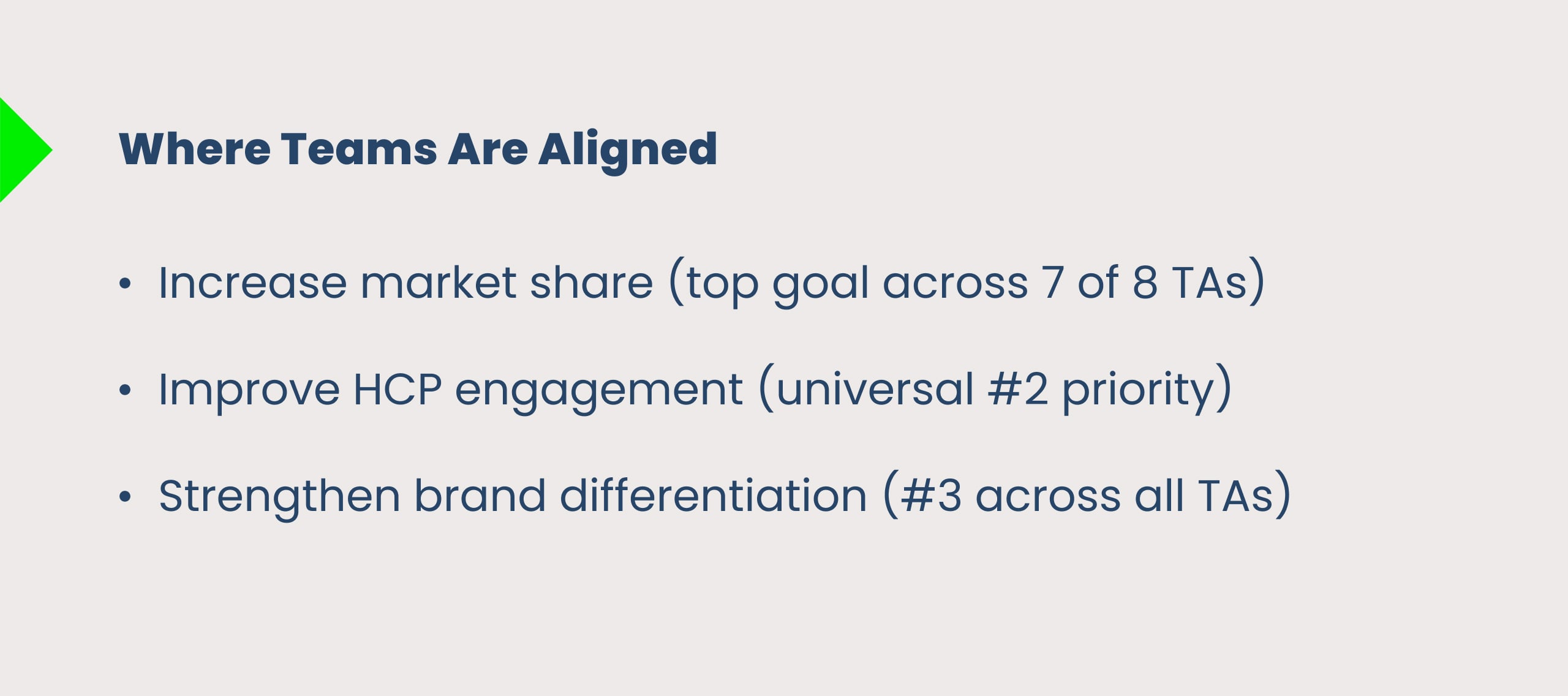
BGBx research across 800 pharma brand leaders in 2025² revealed a striking consistency in goals. Increasing market share ranked first across nearly every therapeutic area. Improving HCP engagement ranked second. Strengthening brand differentiation ranked third. The alignment, from oncology to rare disease, is remarkable.
Brand teams are not confused about direction. They are struggling to move in it. The challenge is not vision. It is continuity. Clinical evidence, stakeholder behavior, data, technology, and commercial execution all need to reinforce one another. Increasingly, they do not.
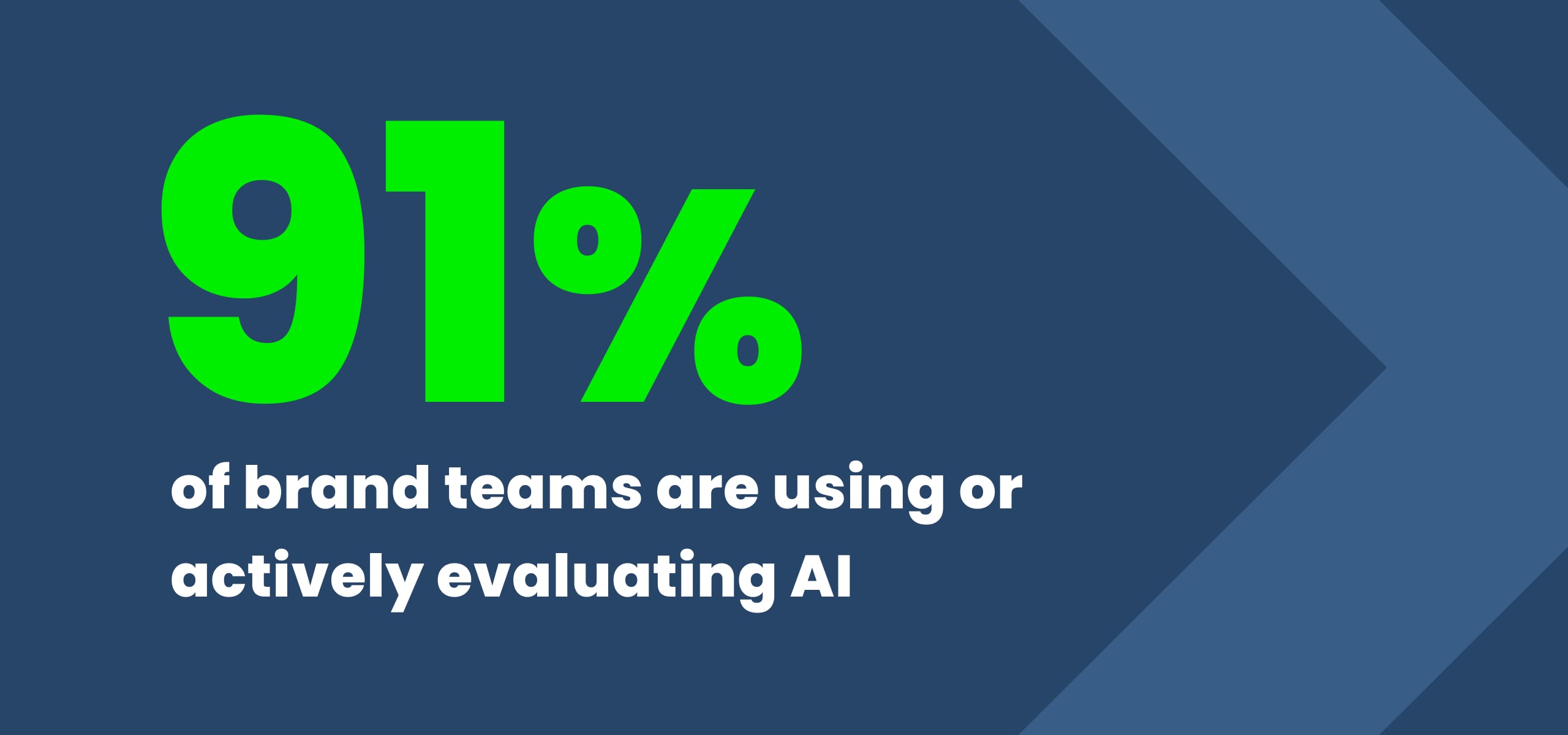
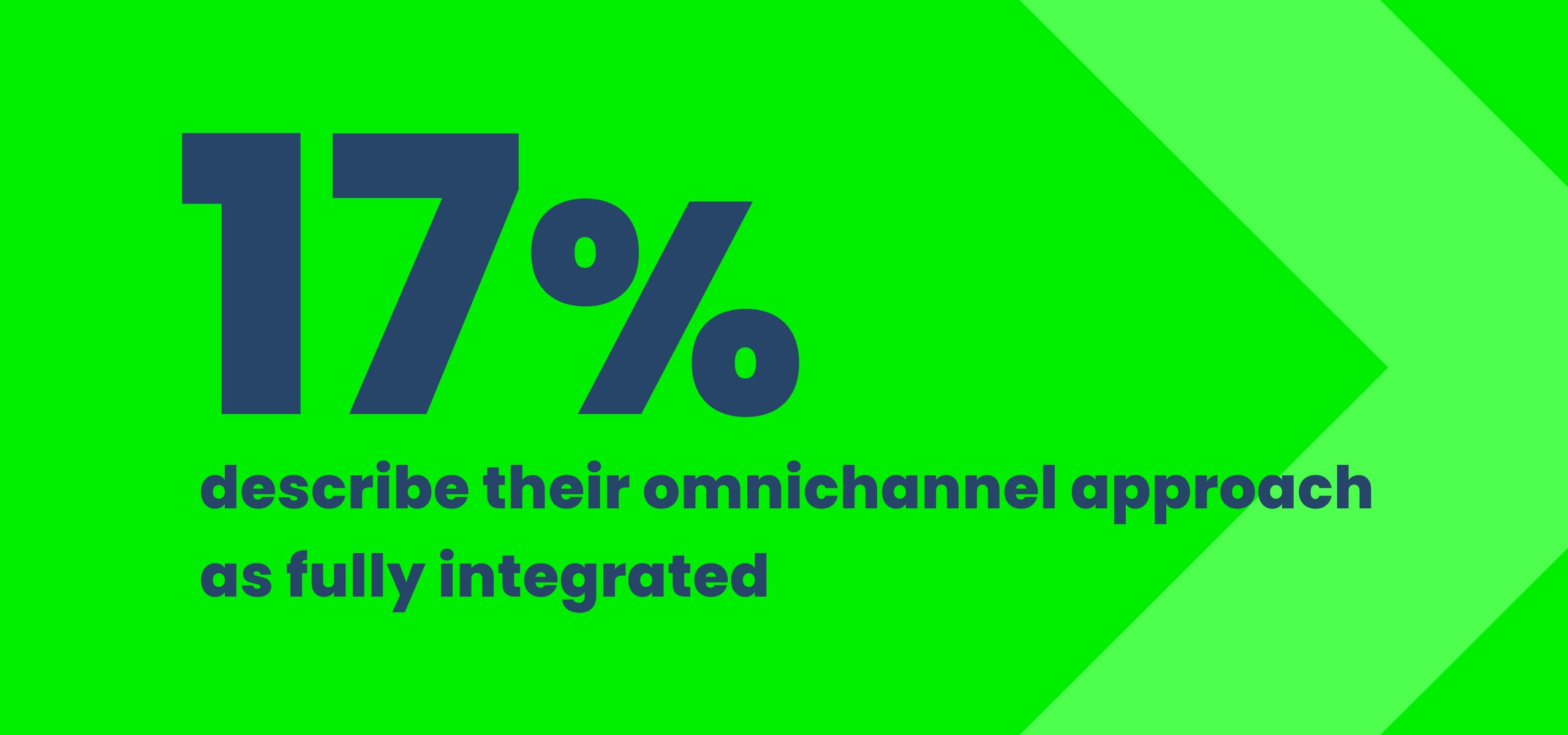
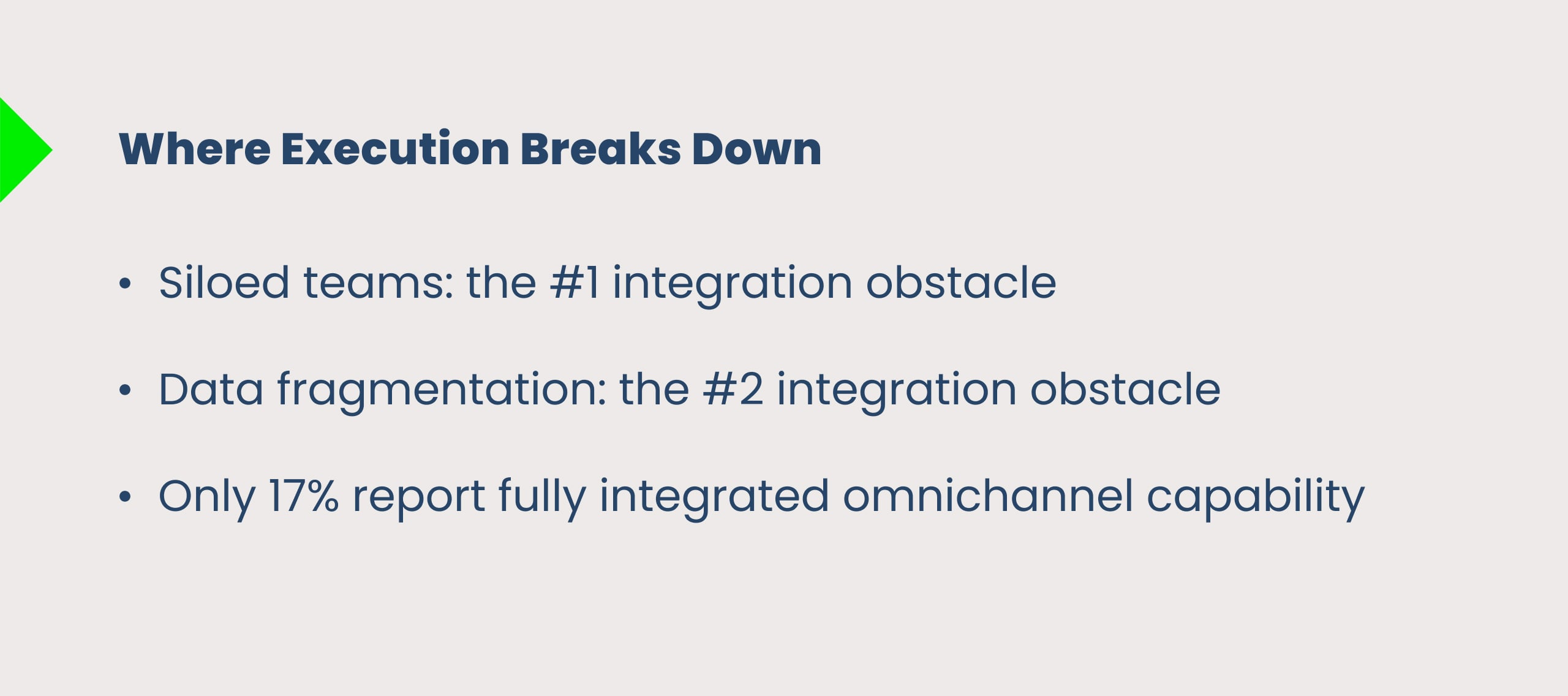
The gap between 91% exploring AI and only 17% achieving full omnichannel integration captures the central tension facing the industry. Technology adoption is racing ahead. Organizational capability is not keeping pace.
When teams were asked what stood in the way of fuller integration, the answers were not strategic. They were structural. Siloed teams ranked first as an obstacle. Data fragmentation ranked second. Technology limitations ranked third. These are organizational and operational problems, not questions of ambition or insight.
Brand teams are not failing to think big enough. They are unable to execute within systems that were not built for the level of coordination today’s market demands.
3. The Root Cause: The In-Quarter Performance Trap
Commercialization has become fundamentally multidimensional. Clinical evidence, stakeholder behavior, market access, positioning, communication, and data continuously shape one another. Yet, the intense pressure to deliver immediate, in-quarter commercial performance frequently forces organizations to deploy localized, near-term solutions that cannot fully address a complex market.
The execution gap emerges not from a lack of vision, but from an operational system that forces a trade-off between immediate velocity and long-term brand health.
To bridge the execution gap, the commercial strategy must shift from reacting to trailing behaviors to scaling against foundational customer intent. Uncovering why a customer intends to practice medicine a certain way provides a universal blueprint that automatically drives appropriate behaviors across every channel. Once this foundational treatment intent is uncovered, we can create more unified messaging and operational efficiency.
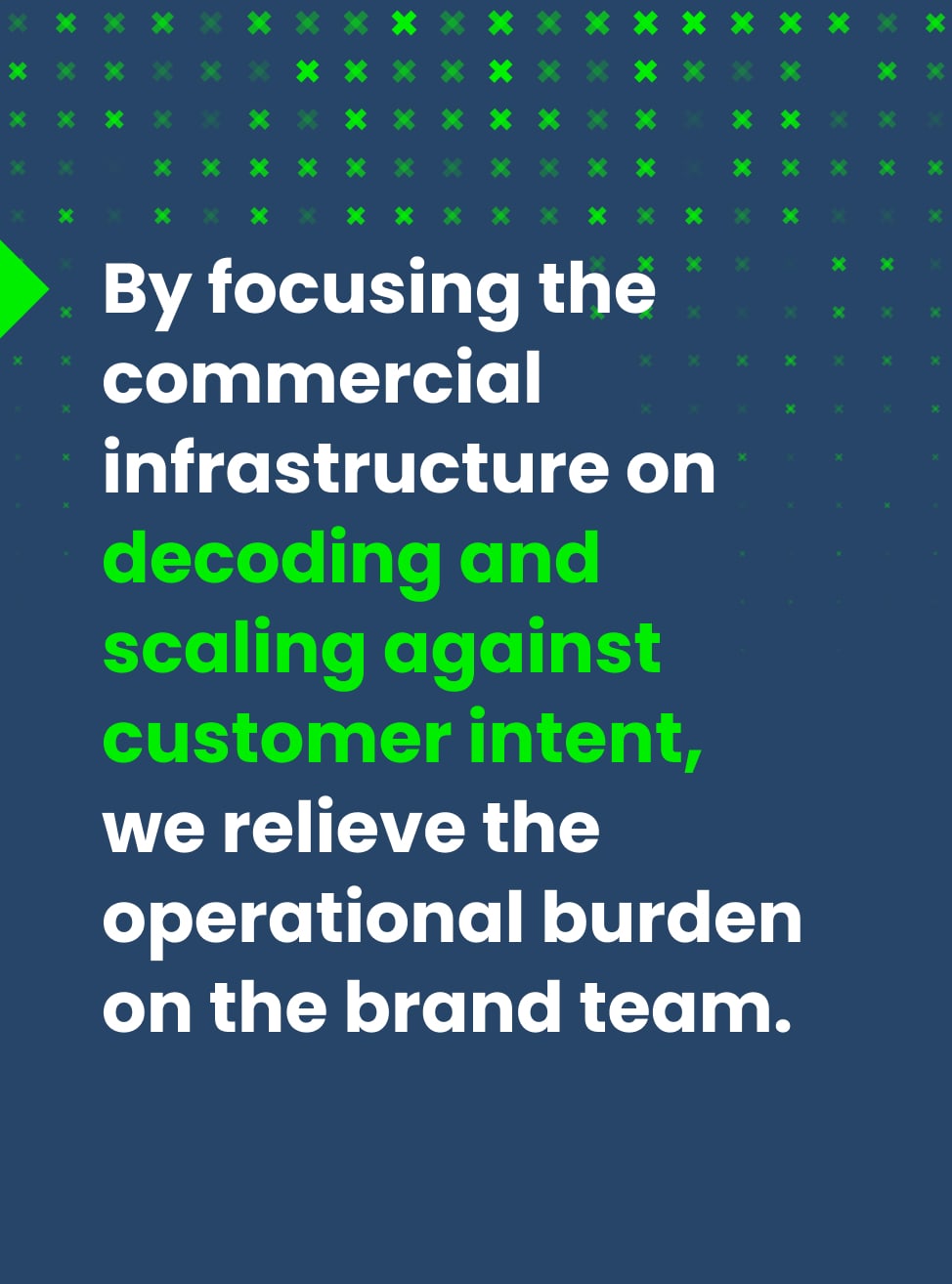
By focusing the commercial infrastructure on decoding and scaling against customer intent, we relieve the operational burden on the brand team. A more complete approach integrates three complementary dimensions: medical science, behavioral science, and data science. Together, these provide a richer understanding of what is clinically true, how stakeholders actually make decisions, and the patterns shaping the market.
Consider what happens when a campaign is built on data and clinical grounding, but without a genuine understanding of the behavioral barriers HCPs face in prescribing. The message may be accurate and relevant. It may still fail to move behavior. Not because the science is wrong, but because the human science is missing.
Or consider the inverse: a campaign grounded in behavioral insight and emotional resonance, but lacking the clinical credibility that HCPs require to trust a brand enough to act. The message may connect emotionally while failing to convert.
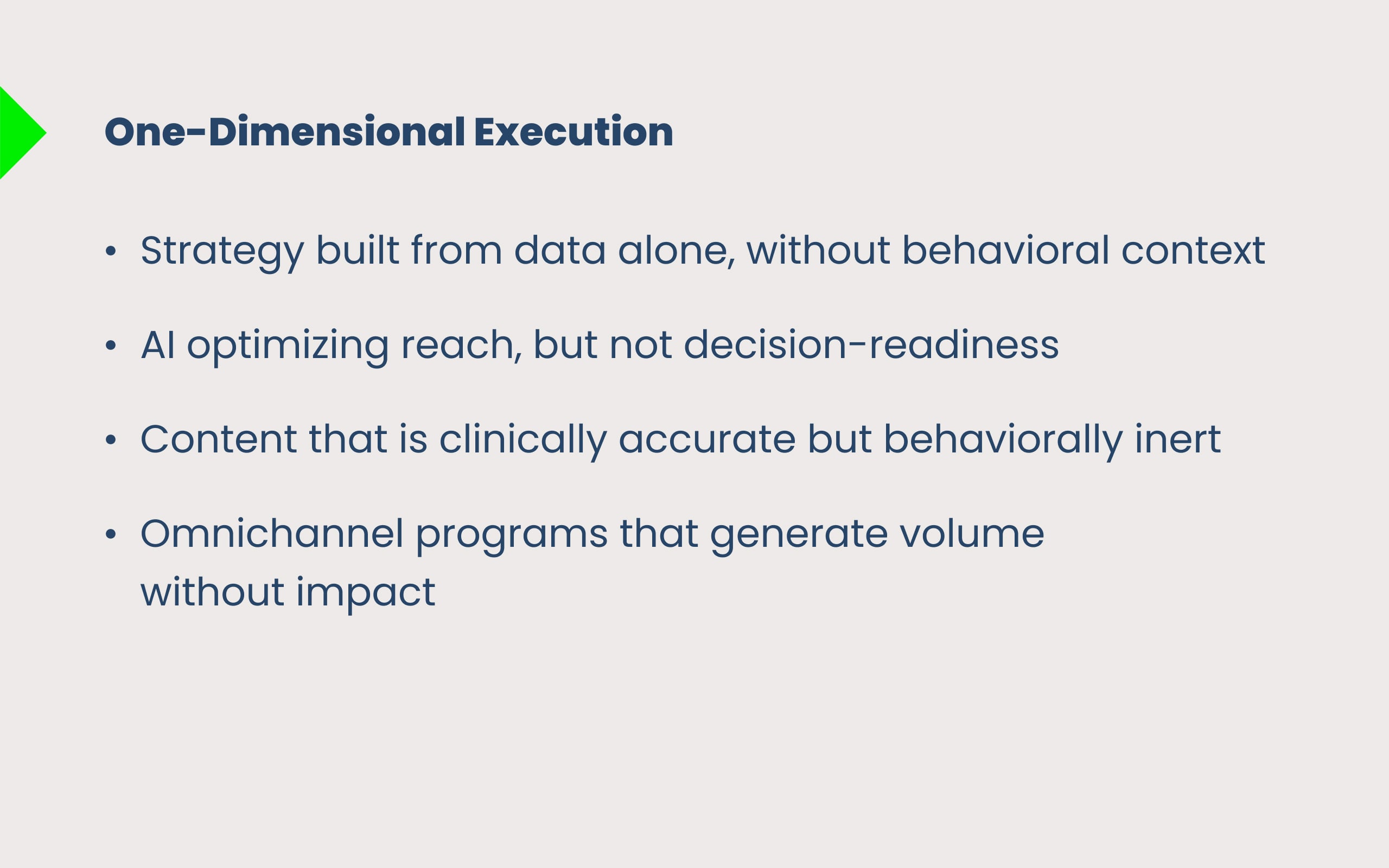
Now layer in AI-powered omnichannel personalization – which 65% of teams in the BGBx research are actively deploying.² AI can optimize reach, frequency, and content sequencing with extraordinary precision. But it optimizes toward whatever objective it is given. Without behavioral grounding, it can personalize the wrong message more efficiently. Without medical credibility, it can scale content that undermines clinical trust. More reach is not the same as more impact.
Throughout this paper, we refer to this integrated perspective as 3D Science. It is not an administrative burden or a critique of current marketing execution; it is an automated infrastructure designed to do the multi-dimensional heavy lifting for the brand team. By connecting these dimensions in the background, organizations can confidently protect long-term market intent.
4. The Practitioner’s View: What The Execution Gap Looks Like In The Real World
The structural patterns our research identifies are not abstractions. They play out in specific, recognizable ways inside pharma brand teams.
In high-priority therapeutic areas like oncology, neurology, and immunology, the complexity is compounded by the nature of the audiences themselves. HCPs in these specialties are sophisticated, time-constrained, and deeply skeptical of marketing that feels generic. They engage with content that reflects a genuine understanding of their clinical reality — the decisions they face, the uncertainties they carry, and the constraints of their practice environment. The most effective engagement begins with understanding customer intent before determining channel, message, or cadence.
When omnichannel strategy is built without that behavioral grounding, the result is often high volume and low resonance. An HCP receives the right message on the right channel at the right time – and does not respond. Not because the execution failed, but because the message did not speak to where they actually are in their decision-making process.
The inflection points that matter most in HCP journeys – the moments when a prescriber moves from awareness to consideration, or from consideration to confidence – are not primarily driven by data or clinical evidence alone. They are driven by belief shifts. Something changes in how the HCP thinks about the disease, the patient population, or the brand’s role in their practice. Identifying those belief shifts, and designing strategy to produce them, requires a behavioral lens that most teams are not systematically applying.
The same dynamic plays out in patient journeys. Patients navigating complex diagnoses – particularly in oncology, CNS, and immunology – encounter specific psychological barriers at predictable points such as confusion about treatment options, anxiety about side effects, and uncertainty about how to have a productive conversation with their HCP. Brands that understand those barriers, and build touchpoints designed to address them, create meaningfully different patient experiences than brands that are simply pushing content.
This is where the execution gap becomes most costly. The resources are deployed, the channels are active, and the AI tools are running – but the needle is not moving, because the underlying human dynamics have not been fully decoded.

5. The AI and Omnichannel Inflection Point
The AI adoption data from our research is striking not just in its scale, but in its pattern. Data analytics leads all AI use cases, at 87% of active AI users. Content generation follows at 74%. Campaign personalization at 65%.² These are, in sequence, the inputs to a complete omnichannel workflow.
Brand teams are building the components of an AI-powered commercial engine. The challenge is that components are not a system. Analytical insights generated in one function are not automatically informing the content strategy in another. Content produced at scale is not automatically personalized in ways that reflect how individual HCPs make decisions. The tools are more sophisticated than the workflows connecting them.
The greater constraint is not individual adoption, but enterprise readiness. Without connected data, shared standards, and integrated systems, AI can accelerate friction just as easily as it can accelerate insight. Even more fundamentally, AI is only as effective as the quality of the customer understanding that informs it. Without a clear view of customer intent, AI can optimize timing and channel selection while still accelerating the wrong message.
Oncology teams, notably, showed lower active AI adoption in our research than other therapeutic areas, but higher rates of active evaluation. This suggests that the most scientifically complex, high-stakes categories are approaching AI with more deliberation, not less interest. That deliberateness is appropriate. The cost of deploying AI-driven content that misses the clinical or behavioral mark in oncology is higher than in less complex categories.
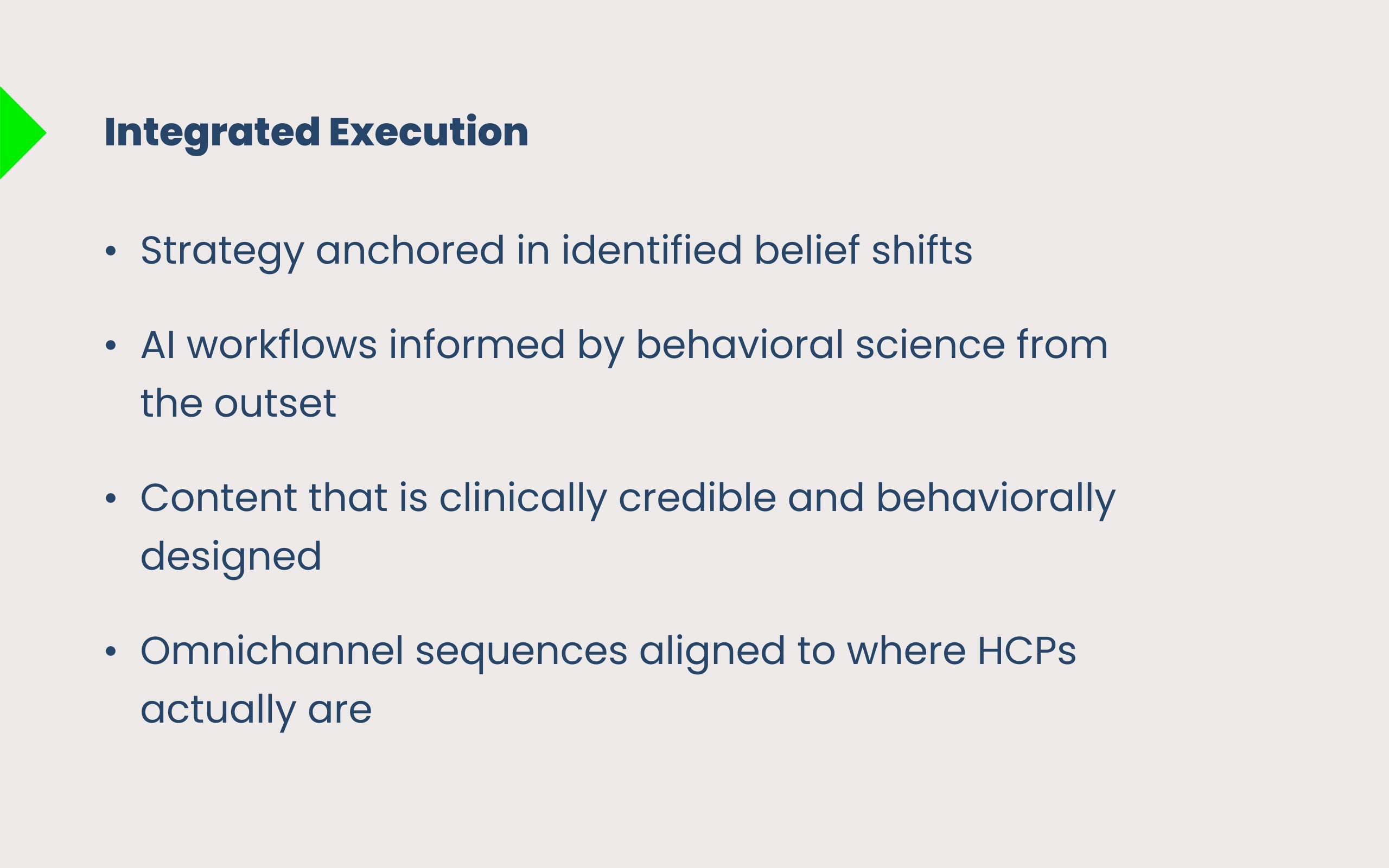
The opportunity, across all therapeutic areas, lies in building AI-powered workflows that are informed by behavioral understanding from the outset. Not layered on as a testing mechanism after the fact, but integrated into how strategy is developed, how content is briefed, and how omnichannel sequences are designed.
The teams that figure this out first will not just execute more efficiently. They will execute more accurately, reaching HCPs and patients at the moments that matter with content that is built around how those audiences actually make decisions.
6. Closing The Gap: What A More Integrated Approach Looks Like
Closing the execution gap does not require a wholesale reinvention of how brand teams operate. It requires a more deliberate integration of three dimensions of insight that most teams are already touching, but rarely triangulating.
Every commercial decision should begin with customer intent. Only then can the three dimensions – behavioral science, medical science, and data science – work together to determine the right message, for the right stakeholder, at the right moment.
Behavioral Science
Before strategy is developed, the key question should be: what do our target HCPs and patients currently believe, and what specific belief shifts are required to drive the behavior we are seeking? This is not a research question to be answered once and filed. It is an orienting question that should shape how strategy is framed, how content is briefed, and how channels are sequenced.
Medical Science
Every strategy should be stress-tested against clinical reality: Is this clinically credible? Does it reflect the actual complexity of the disease and the decisions HCPs face? Clinical grounding is more than a regulatory requirement. It is a trust-building mechanism, and trust is what converts HCP awareness into prescribing confidence.
Data Science
Market signals, HCP engagement patterns, patient journey analytics. These reveal where the market is moving and where the gaps are. Data science transforms behavioral and clinical hypotheses into testable, measurable programs and creates the feedback loops that allow teams to learn and adjust in real time.
When these three dimensions are integrated, the result is not just better strategy. It is faster, more confident execution. Teams spend less time in internal alignment debates because the strategic rationale is grounded in observable evidence. AI tools perform better because they are optimizing toward behaviorally informed customer intent. Omnichannel programs achieve higher resonance because the content is built around how audiences actually make decisions, not how the brand wishes they would.
The first move is rarely structural. It does not require a new technology investment or a reorganization. It requires a single orienting question, asked before strategy is developed: what do our HCPs and patients currently believe, and what specifically needs to change for them to act differently? That question, applied consistently and answered rigorously, is what starts the movement. Everything else builds from there.
7. Looking Ahead
The execution gap is not a permanent condition. It is a moment of transition. The brands that move decisively through it will define the commercial landscape for the next several years.
BGBx has already launched its 2026 research program, with expanded focus on AI adoption and omnichannel integration. As those findings emerge, we will continue to track how brand teams are adapting and share what we learn. One thing is already clear: the industry is beginning to ask better questions.
The brands that will lead are not necessarily those with the largest budgets or the most sophisticated technology. They will be the organizations that integrate science, strategy, data, and execution into a continuous commercial system. That integration will enable a deeper understanding of customer intent – what stakeholders believe, what holds them back, and what will move them forward.
The question is no longer what to do. It is how to do it with precision, consistency, and at the speed today’s market demands.
Ready To Close The Gap?
Delivering impact requires connected teams, integrated capabilities, and a clear-eyed understanding of what moves your audiences. BGBx Communications partners with pharma brands to do exactly that. Start the conversation: smahoney@bgbgroup.com.
About the Authors

Drew Bustos
Chief Growth Officer, BGBx
Drew Bustos specializes in helping pharmaceutical organizations navigate increasingly complex commercial environments through integrated strategy, AI, and market insight. He focuses on translating emerging market trends into practical strategies that strengthen commercial execution. Over two decades in life sciences technology and commercialization, including leadership roles at IQVIA, Clario, and BGBx, have shaped his ability to connect strategy, data, and execution to drive stronger commercial outcomes.

Broderick Crosland
Strategic Marketing & Omnichannel Advisor
Brodey Crosland helps pharmaceutical organizations bridge the gap between strategy and execution by creating more connected customer experiences. His experience at leading global pharmaceutical companies has centered on applying behavioral insights, data science, and AI to improve commercial execution across complex healthcare markets. Today, he focuses on helping organizations better understand customer intent and translate those insights into more effective omnichannel engagement.
About BGBx
BGBx is an independent commercial solutions partner for pharmaceutical and life science companies and their brands, combining consulting, communications, science, creativity, data, technology, innovation, and digital capabilities to deliver breakthrough results. Through BGBx Consulting and BGBx Communications, the company helps clients set strategy early, stay aligned throughout the product lifecycle, and execute through marketing and communications programs that drive impact. BGBx is Built for Breakthrough. bgbx.com
Sources
- Boathouse Fifth Annual CEO Study, January 2026. Survey of 150 CEOs of major U.S. companies. boathouseinc.com
- BGBx 2025 Pharma Brand Leader Research: Clarity of Goals, Complexity of Execution. Survey of 800 pharma brand leaders across eight therapeutic areas.
- Bilodeau, K. (2026, January 30). How Big Pharma is navigating a $300 billion patent cliff. PharmaVoice. https://www.pharmavoice.com/news/big-pharma-navigating-patent-cliff-300-billion-jnj-merck-abbvie/810915/
